Turn Organic Traffic Into Real Business Results
Getting traffic is good. Getting results is better.
Many websites rank on Google but fail to generate leads, calls, or sales. That happens because they focus only on keywords, not on conversions.
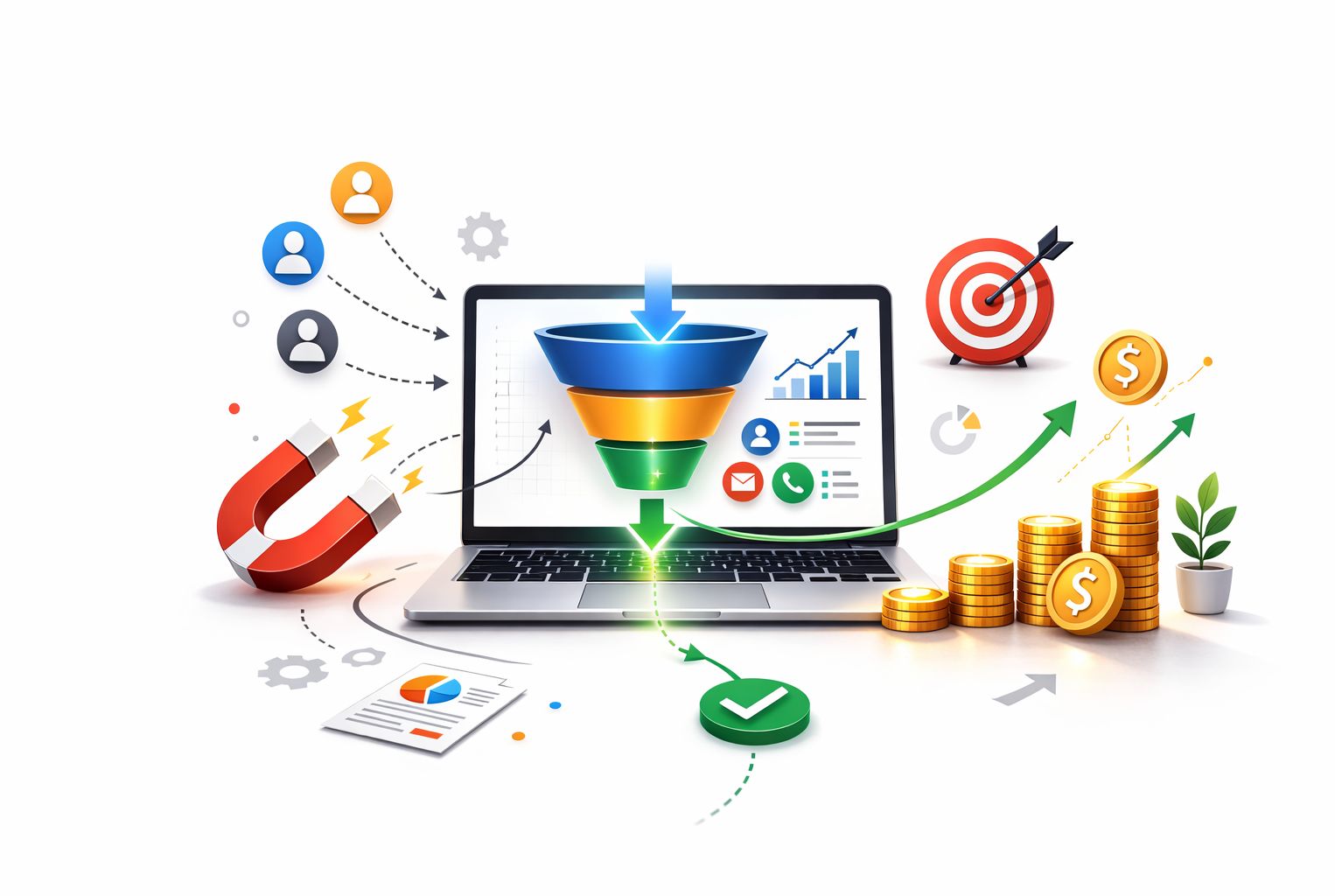
A Conversion-Focused SEO Strategy ensures your website attracts the right visitors and guides them toward action.
SEO should not just increase traffic.
It should increase revenue.

Table of Contents
The Problem With Traditional SEO
Traditional SEO often focuses on:
- Ranking position
- Keyword volume
- Backlink numbers
- Traffic growth
But traffic alone does not guarantee business growth.
If visitors:
- Leave quickly
- Do not understand your offer
- Do not trust your brand
- Cannot find contact details easily
Then rankings become meaningless. SEO must align with business goals.
What Is Conversion-Focused SEO?
Conversion-Focused SEO is the process of optimizing your website to:
- Attract qualified traffic
- Match user intent
- Build trust
- Encourage action
- Increase lead generation
It combines:
- Keyword strategy
- Content clarity
- User experience
- Trust signals
- Call-to-action placement
This approach ensures search traffic becomes measurable growth.

Step 1: Target High-Intent Keywords
Not all keywords bring buyers.
Some keywords are informational. Some are commercial. Some are ready-to-buy.
A strong strategy focuses on:
- Service-based keywords
- Local intent keywords
- Problem-solving queries
- Comparison keywords
Targeting high-intent searches improves conversion rate naturally.
Step 2: Align Content With Search Intent
If someone searches:
“SEO consultant in Dubai”
They want service information — not a long blog.
Your page must:
- Clearly explain your offer
- Show experience
- Display proof
- Provide easy contact options
Matching intent increases trust and engagement.
Step 3: Improve Page Structure for Action
Conversion-focused pages must include:
- Clear headline
- Benefit-driven subheadings
- Short paragraphs
- Strong call-to-action
- Contact visibility
- Trust elements
Confusing design reduces conversions. Simple structure increases clarity.
Step 4: Build Trust Signals
Trust increases conversion rate.
Add:
- Testimonials
- Case studies
- Author credibility
- Clear contact details
- Consistent branding
This connects directly with your:
Learn Authority Building & Brand Signals page.
Trust is a ranking signal and a conversion driver.
Step 5: Improve Website Performance
Slow websites reduce conversions.
Visitors leave if pages load slowly.
Optimizing:
- Page speed
- Mobile responsiveness
- Clean navigation
Supports both SEO and sales.
This connects with:
Learn Website Performance & Crawl Optimization
Good performance improves both rankings and user experience.
Step 6: Strategic Internal Linking
Internal linking should guide visitors logically.
For example:
- Blog → Service page
- Service page → Case study
- Case study → Contact page
Internal links should move users closer to action.
SEO traffic must flow toward conversion pages.
Step 7: Measure & Improve
Conversion-focused SEO requires tracking.
Monitor:
- Click-through rate
- Bounce rate
- Form submissions
- Call tracking
- Landing page performance
Data shows where improvements are needed.
Continuous optimization leads to long-term growth.
Why Conversion-Focused SEO Is Important
Many competitors may rank higher.
But if your website converts better, you win.
This strategy helps:
- Improve ROI
- Reduce wasted traffic
- Increase qualified leads
- Strengthen business growth
- Lower dependency on paid ads
It also supports:
Search Experience Optimization (SXO)
AI Search & Generative Engine Optimization
Algorithm Recovery & Risk Management
Everything connects to conversion.
Common Mistakes to Avoid
Avoid these issues that reduce leads and sales, even when you get traffic from SEO.
-
01Strategy
Chasing high-volume keywords only
Big search volume doesn’t always mean high conversions or good intent.
-
02Experience
Ignoring user journey
Users need a clear path from landing page to action without confusion.
-
03Conversion
Weak call-to-actions
CTAs should be visible, specific, and placed at the right moments.
-
04Design
Overcomplicated design
Too many sections and effects reduce focus and hurt conversions.
-
05Trust
No trust signals
Add reviews, certifications, case studies, and clear contact details.
-
06Data
No performance tracking
Track goals, calls, forms, and user behavior to improve results.
Reminder: SEO without conversion planning wastes opportunity.
Conclusion
Conversion-Focused SEO Strategy shifts the goal from “ranking higher” to “growing smarter.”
Traffic is only valuable when it turns into leads, calls, or sales.
By combining:
- High-intent targeting
- Clear content
- Strong authority
- Technical performance
- User-focused design
You create an SEO system that drives measurable results.
If you want SEO that generates real business growth, focus on conversions — not just rankings.
Build an SEO strategy that delivers results, not just traffic.
Frequently Asked Questions – FAQs
Yes. Small businesses can compete by targeting niche keywords and improving user experience. Even with lower traffic, high-quality conversions can generate strong ROI.
Success is measured using:
- Lead form submissions
- Phone calls
- Sales conversions
- Conversion rate
- Revenue from organic traffic
Traffic alone is not the main metric — results are.
Yes. Service businesses benefit greatly because inquiries and calls matter more than traffic numbers. A structured SEO strategy can increase direct leads from search engines.
Initial improvements may appear within a few weeks after optimizing key pages. Strong and stable growth typically takes 3–6 months depending on competition and authority.
Not necessarily. It improves traffic quality. Instead of attracting random visitors, it attracts users who are ready to take action.
Example:
1,000 random visitors may generate fewer leads than 200 highly targeted visitors.
Key elements include:
- High-intent keywords
- Clear call-to-action buttons
- Trust signals (reviews, testimonials)
- Fast loading speed
- Mobile-friendly design
- Simple contact forms
These elements help turn traffic into measurable business results.
This usually happens when websites target broad keywords without clear user intent. If visitors land on a page that does not guide them clearly, they leave without taking action. Strong call-to-actions, trust signals, and relevant content improve conversion rates.
Regular SEO mainly focuses on rankings and traffic. Conversion-focused SEO focuses on results.
For example, ranking for a high-volume keyword may bring traffic, but ranking for a high-intent keyword like “hire SEO consultant in Dubai” is more likely to generate inquiries.
A Conversion Focused SEO Strategy is an approach that not only increases website traffic but also turns visitors into leads, calls, or sales. It focuses on attracting the right audience and guiding them toward taking action instead of just improving keyword rankings.